Automotive primer is one of the most important materials used in vehicle painting and restoration projects. Whether you are repairing a small scratch, restoring a classic car, or applying a completely new paint job, primer creates the foundation that determines the quality and durability of the final finish. Many vehicle owners focus primarily on paint color and gloss, but the success of any automotive paint project largely depends on proper surface preparation and primer application. Automotive primer improves paint adhesion, protects metal surfaces from corrosion, and helps create a smooth and professional appearance. Understanding the different types of primers, their benefits, and proper application techniques can help achieve long-lasting results while preventing common painting problems that may affect the appearance and lifespan of a vehicle’s finish.
What Is Automotive Primer?
Automotive primer is a specialized coating applied to a vehicle’s surface before the final paint layers. It serves as a bonding agent between the vehicle material and the topcoat paint, ensuring strong adhesion and a uniform finish. Primer is commonly used on bare metal, fiberglass, plastic, and previously repaired surfaces. It helps fill minor imperfections, creates a smooth base, and improves paint durability. Without automotive primer, paint may not adhere properly and can peel, chip, or fade prematurely. Modern automotive primers are designed to provide excellent protection against moisture and environmental damage while enhancing the overall quality of the paint system. This makes primer an essential component of professional automotive refinishing and restoration projects.
Why Automotive Primer Is Important
Automotive primer plays a critical role in achieving a durable and attractive paint finish. One of its primary functions is improving adhesion between the vehicle surface and the paint layers. It also seals porous materials and prevents contaminants from affecting the final coating. Primer helps protect metal surfaces from rust and corrosion, extending the life of the paint job. In addition, it minimizes visible imperfections such as sanding marks, scratches, and minor dents. By creating a uniform surface, primer allows paint colors to appear more consistent and vibrant. Skipping this important step can lead to poor paint performance, uneven coverage, and costly repairs in the future.
Different Types of Automotive Primer
Several types of automotive primer are available, each designed for specific applications and surfaces. Epoxy primer is widely used because of its excellent adhesion and corrosion resistance. Urethane primer provides a smooth surface and is commonly used for high-quality paint finishes. Self-etching primer contains chemicals that bond directly to bare metal, making it ideal for rust prevention. High-build primer is designed to fill surface imperfections and sanding scratches before painting. Primer surfacers combine sealing and smoothing properties to prepare surfaces efficiently. Understanding the characteristics of each type allows vehicle owners and professionals to select the most suitable automotive primer for their specific project requirements and desired finish quality.
How Automotive Primer Protects Vehicle Surfaces
One of the most valuable benefits of primer is its ability to protect vehicle surfaces from environmental damage. Metal surfaces are highly vulnerable to moisture, oxygen, road salt, and pollutants that can lead to corrosion. Primer creates a protective barrier that reduces exposure to these harmful elements. It also seals repaired areas, preventing moisture from penetrating body filler or exposed materials. In addition to rust protection, automotive primer improves resistance to temperature changes and everyday wear. This protective layer helps maintain the integrity of the paint system over time. Proper primer application contributes significantly to the long-term durability and appearance of automotive finishes in various weather conditions.
Preparing a Surface Before Applying Primer
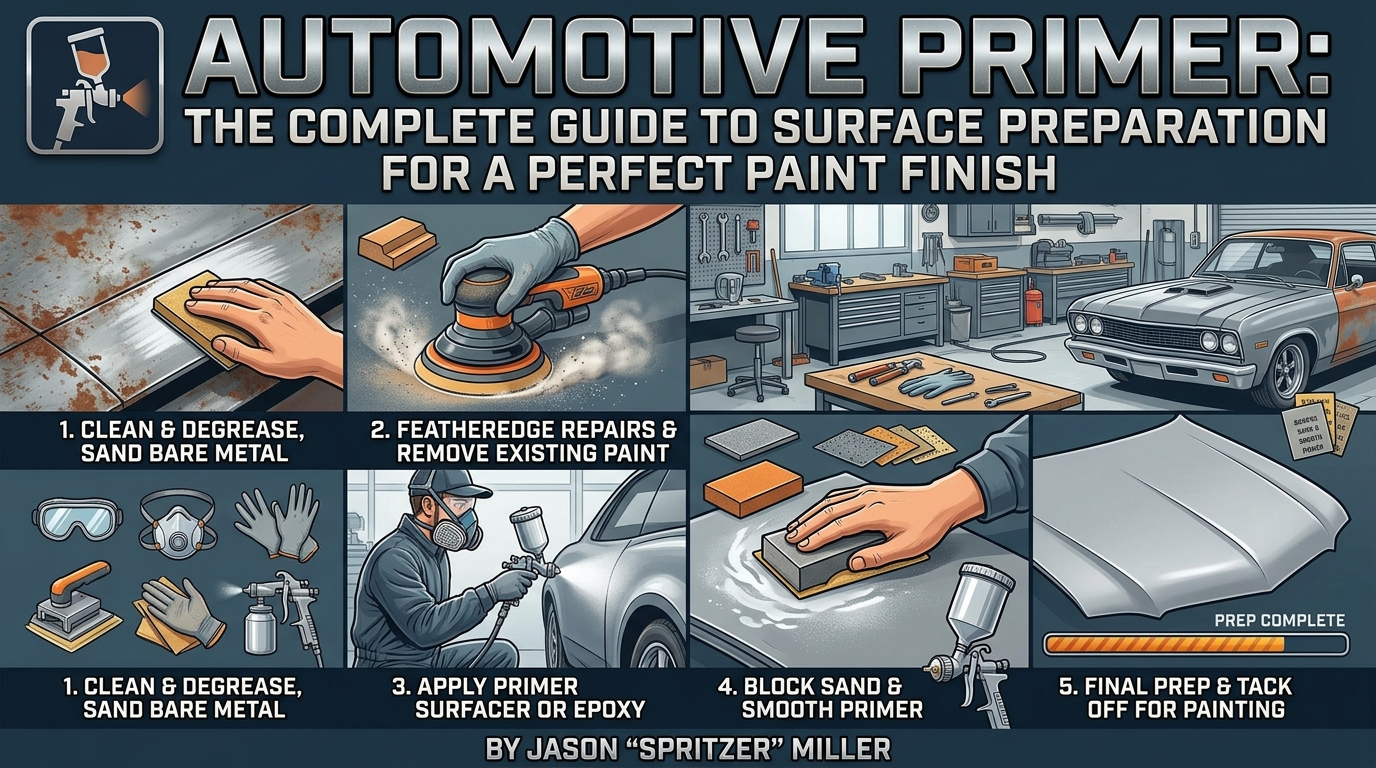
Proper surface preparation is essential for achieving the best results with automotive primer. The process begins by thoroughly cleaning the vehicle surface to remove dirt, grease, wax, and contaminants. Damaged areas should be repaired and sanded to create a smooth and even surface. Rust must be removed completely before primer application to prevent future corrosion problems. After sanding, dust should be carefully cleaned away using appropriate cleaning products. Masking nearby areas helps prevent overspray during the priming process. Taking the time to prepare the surface correctly ensures that the automotive primer adheres properly and provides maximum protection, durability, and support for the final paint layers.
Best Practices for Applying Automotive Primer
Applying automotive primer correctly is essential for achieving a professional-quality finish. The primer should be mixed according to the manufacturer’s instructions and applied in thin, even coats. Spray guns are commonly used because they provide consistent coverage and smooth application. Each coat should be allowed to dry properly before additional layers are added. Adequate ventilation and proper temperature conditions help ensure optimal curing performance. After the primer has dried completely, sanding may be required to eliminate minor imperfections and create a smooth surface. Following recommended application techniques improves adhesion, reduces defects, and helps produce a flawless paint finish that meets professional automotive refinishing standards.
Common Mistakes to Avoid When Using Primer
Many painting problems can be traced back to mistakes made during the priming stage. One common error is applying primer to dirty or poorly prepared surfaces, which can reduce adhesion and cause peeling. Using the wrong type of automotive primer for a specific material may also affect performance. Applying excessively thick coats can lead to cracking, extended drying times, and uneven surfaces. Insufficient drying time between coats often causes finish defects and poor paint bonding. Skipping sanding steps can leave visible imperfections that affect the final appearance. Avoiding these common mistakes helps ensure that the primer performs effectively and provides the strong foundation needed for a durable and attractive paint job.
Automotive Primer for Restoration and Repair Projects
Automotive primer is especially important in vehicle restoration and repair projects where surfaces may be damaged, rusted, or heavily worn. Restoration professionals rely on primer to create a stable foundation for refinishing older vehicles. It helps restore surface integrity, improve corrosion resistance, and prepare repaired areas for painting. In collision repair work, primer ensures seamless blending between original and repaired sections of the vehicle. Different primer formulations can be selected based on the materials involved, including steel, aluminum, fiberglass, and plastic components. By using the appropriate automotive , restoration specialists can achieve high-quality results that enhance both the appearance and longevity of repaired or restored vehicles.
Future Developments in Automotive Primer Technology
The automotive refinishing industry continues to develop advanced primer technologies that improve performance, efficiency, and environmental sustainability. Modern automotive primers increasingly feature low-VOC formulations that reduce environmental impact while maintaining excellent adhesion and protection. Manufacturers are also developing faster-drying products that help reduce project completion times. Improved corrosion-resistant technologies offer greater durability in challenging environments. Some advanced primers include enhanced filling capabilities that reduce sanding requirements and improve productivity. As vehicle materials and painting systems continue to evolve, primer technology will remain an important area of innovation. These advancements will help professionals and vehicle owners achieve superior finishes with greater efficiency and long-term protection.
Conclusion
Automotive primer is a fundamental component of any successful vehicle painting, restoration, or repair project. It provides the essential foundation needed for strong paint adhesion, corrosion protection, and a smooth professional finish. From preparing surfaces and filling imperfections to enhancing durability and appearance, primer performs several critical functions that directly affect the quality of the final result. Understanding the different types of primer and applying them correctly can significantly improve paint performance and longevity. As refinishing technology continues to advance, automotive primer will remain an indispensable part of achieving high-quality automotive finishes that withstand environmental challenges and maintain their appearance for years to come.