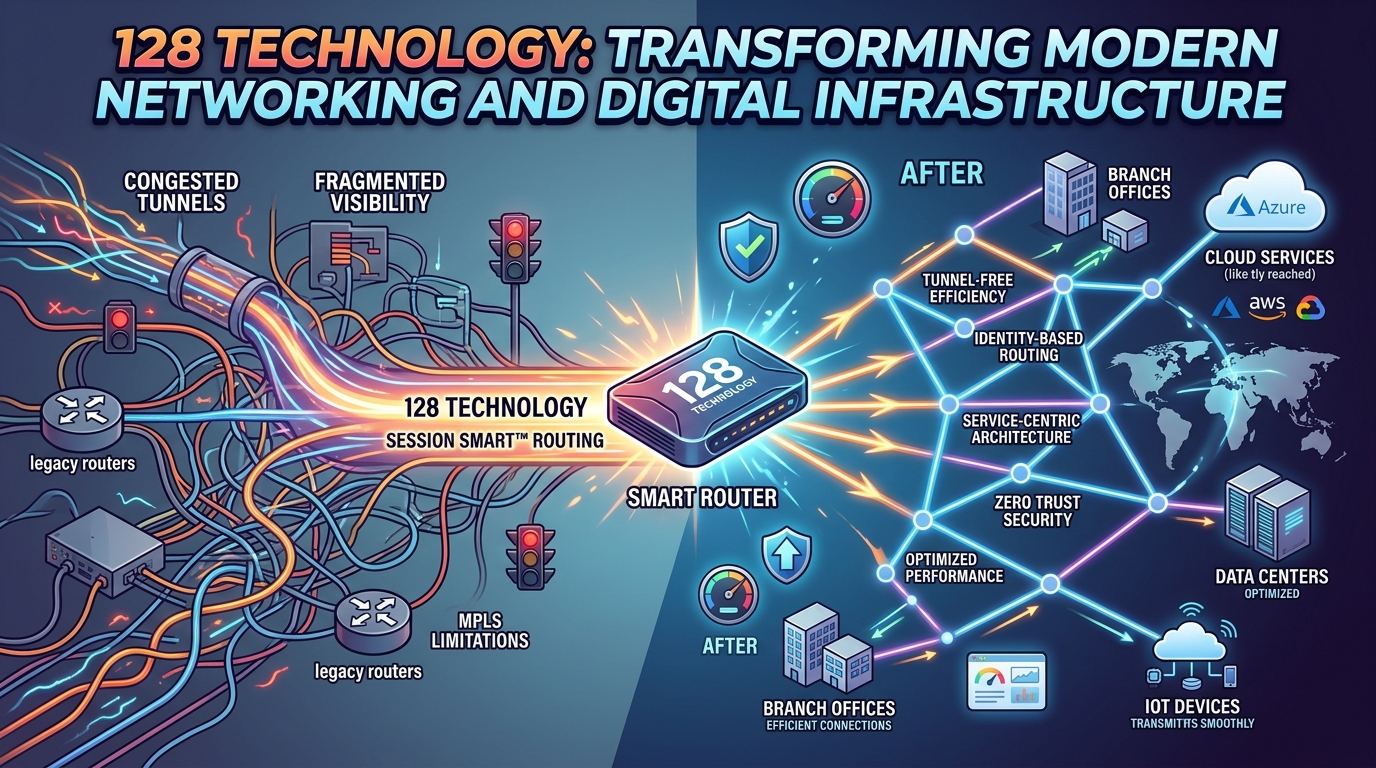
In today’s rapidly evolving digital landscape, organizations require networking solutions that are secure, scalable, and efficient. 128 Technology has emerged as an innovative approach to networking, helping businesses modernize their infrastructure and improve connectivity across distributed environments.
Unlike traditional networking models that rely heavily on static configurations and complex architectures, 28 Technology focuses on intelligent networking principles that prioritize security, performance, and operational simplicity. As enterprises continue to embrace cloud computing, remote work, and digital transformation, understanding the significance of 28 Technology becomes increasingly important.
What Is 128 Technology?
128 Technology is a networking solution designed to simplify connectivity through advanced routing and session-based networking concepts. The technology was developed to address many of the limitations associated with conventional network architectures.
Traditional networks often require complex configurations involving VPNs, firewalls, and routing protocols. 28 Technology introduces a more dynamic approach that focuses on secure sessions rather than simply routing packets between locations.
This innovative model allows organizations to improve network visibility, strengthen security, and optimize application performance while reducing operational complexity.
Key Features of 128 Technology
One reason for the growing popularity of 128 Technology is its powerful collection of features that support modern business requirements.
Some of the most important features include:
- Session-based networking
- Enhanced network visibility
- Simplified deployment
- Cloud-native architecture
- Built-in security controls
- Application-aware routing
- Reduced network complexity
- Improved scalability
- Centralized management
These capabilities enable organizations to build efficient and secure networks that can adapt to changing business needs.
How 128 Technology Improves Network Performance
Performance is a critical factor in modern networking. 128 Technology enhances performance by intelligently directing traffic based on application requirements and network conditions.
Instead of relying solely on traditional routing methods, the technology identifies individual sessions and optimizes their paths accordingly. This approach helps reduce latency, improve application responsiveness, and ensure a better user experience.
Organizations that rely on cloud applications, video conferencing, and remote collaboration can particularly benefit from the performance advantages offered by 28 Technology.
Security Benefits of 128 Technology
Security remains one of the most significant challenges facing businesses today. 128 Technology incorporates security directly into the networking framework rather than treating it as a separate component.
Key security benefits include:
Identity-Based Access Control
Network access decisions are based on verified identities rather than IP addresses alone.
Reduced Attack Surface
Unnecessary network exposure is minimized, making it more difficult for attackers to exploit vulnerabilities.
Encrypted Communications
Data remains protected while traveling across networks.
Secure Application Access
Users gain access only to the resources they are authorized to use.
These security capabilities help organizations maintain strong protection while simplifying network management.
The Role of 128 Technology in Cloud Networking
Cloud adoption continues to accelerate across industries. 128 Technology supports cloud-first strategies by providing secure and efficient connectivity between users, applications, and cloud environments.
Many organizations operate hybrid infrastructures that combine on-premises systems with public and private cloud services. Managing connectivity across these environments can be challenging.
128 Technology helps address these challenges by:
- Simplifying cloud connectivity
- Improving application performance
- Enhancing security
- Supporting multi-cloud environments
- Reducing management complexity
As cloud computing becomes more important, the role of 28 Technology is expected to grow significantly.
Business Advantages of Adopting 128 Technology
Organizations implementing 128 Technology often experience a variety of operational and financial benefits.
Lower Infrastructure Costs
Simplified architectures reduce hardware and maintenance requirements.
Improved Operational Efficiency
Network administrators spend less time managing complex configurations.
Enhanced User Experience
Applications perform more reliably and efficiently.
Better Scalability
Networks can expand more easily as business needs evolve.
Increased Reliability
Intelligent routing helps maintain connectivity even during network disruptions.
These benefits contribute to greater productivity and long-term business success.
Future Trends Shaping 128 Technology
The future of 128 Technology is closely linked to emerging trends in networking and digital transformation.
Several developments are expected to influence its growth:
- Artificial intelligence in networking
- Software-defined networking
- Edge computing
- Zero-trust security models
- Internet of Things (IoT)
- Multi-cloud adoption
- Automation and orchestration
As organizations continue to modernize their infrastructure, technologies that support flexibility and security will become increasingly valuable.
Why 128 Technology Matters in the Digital Age
The digital economy depends on secure and reliable connectivity. 28 Technology addresses many of the challenges associated with traditional networking while supporting the demands of modern businesses.
Its session-based architecture, built-in security features, and cloud-friendly design make it an attractive solution for organizations seeking to improve network performance and simplify management.
As digital transformation accelerates, businesses that embrace innovative networking solutions like 28 Technology may gain significant competitive advantages.
Conclusion
128 Technology represents a modern approach to networking that combines security, performance, and simplicity. By moving beyond traditional routing models and focusing on intelligent session-based networking, it helps organizations build more efficient and secure infrastructures.
From cloud connectivity and application performance to security and scalability, 28 Technology provides valuable benefits for businesses operating in today’s digital environment. As technology continues to evolve, its importance in shaping the future of networking is likely to increase even further.